OSWALDO MOOSER'S FOSSILS FROM AGUASCALIENTES, MEXICO: A SYSTEMATIC APPROACH TO LOST AND FOUND SPECIMENS
Los fósiles de Oswaldo Mooser de Aguascalientes, México: Un enfoque sistemático de ejemplares perdidos y encontrados
DOI:
https://doi.org/10.5710/PEAPA.24.06.2025.533Keywords:
El Cedazo Local Fauna, Holotypes, Megafauna, Pleistocene, TaxonomyAbstract
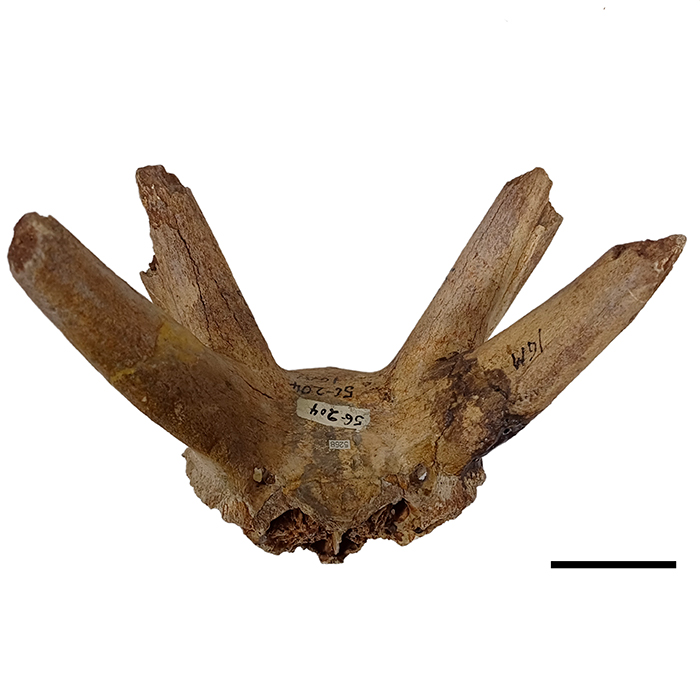
Palaeontology in the state of Aguascalientes (México) has an extensive history dating back to 1799. However, it was not until the 1950s that Oswaldo Mooser began to formally describe the palaeontological biodiversity of the state, together with other palaeontologists such as Walter W. Dalquest, with whom he even described multiple new species from local discoveries. Much of the fossil material collected by Mooser was donated to different scientific collections, but the location of several specimens was never specified, and they were lost for decades, including holotypes. Bibliographic sources were consulted to trace the location of part of the Mooser’s collection. A total of four local, national, and foreign institutions were consulted to examine the palaeontological material, and a compilation of various fossils collected by Mooser in Aguascalientes was made, resulting in 76 original specimens of which nine are holotypes. Additional bibliographic sources were used to describe and reassess some specimens that had not been properly evaluated before. Previously published information of the fossil material was complemented, and the anatomical description of some specimens is also presented for the first time. Twenty new reports of unpublished fossils collected by Mooser are addressed in this work. The data obtained have implications for the evaluation of the examined taxa, as the specimens documented in this study still require intensive and specific analyses that cover aspects of their systematics, evolution, ecology, and natural history. Thus, the present work aims to serve as a basis for future palaeontological studies.
References
Alberdi, M. T., Arroyo-Cabrales, J., Marín-Leyva, A. H., & Polaco, O. J. (2014). Study of Cedral Horses and their place in the Mexican Quaternary. Revista Mexicana de Ciencias Geológicas, 31(2), 221–237.
Alberdi, M. T., Menegaz, A. N., & Prado, J. L. (1987). Formas terminales de Hippidion (Mammalia, Perissodactyla) de los yacimientos del Pleistoceno tardío-Holoceno de la Patagonia (Argentina y Chile). Estudios Geológicos, 43(1–2), 107–115. https://doi.org/10.3989/egeol.87431-2577
Allen, J. A. (1876). Description of some remains of an extinct species of wolf and an extinct species of deer from the Lead Region of the Upper Mississippi. American Journal of Science and Arts, Series 3, 11(61), 47–51. https://doi.org/10.2475/ajs.s3-11.61.47
Ameghino, F. (1902). Notas sobre algunos mamíferos fósiles nuevos o poco conocidos del valle de Tarija. Anales del Museo Nacional de Buenos Aires, 3(1), 225–261.
Anderson, E. (1984). Who's who in the Pleistocene: A mammalian bestiary. In Martin P. S., & Klein, R. G. (Eds.), Quaternary Extinctions. A Prehistoric Revolution, pp. 40–89. University of Arizona Press. Tucson, U.S.A. https://doi.org/10.2307/j.ctv264f91j.6
Arroyo-Cabrales, J. (2002). Registro fósil del jaguar. In Medellín, R. A. (Ed.), El jaguar del nuevo milenio, pp. 343–354. Fondo de Cultura Económica, Universidad Nacional Autónoma de México. Ciudad de México, Mexico.
Arroyo-Cabrales, J., & Carranza-Castañeda, O. (2009). Los cánidos prehistóricos mexicanos antes de la llegada del perro. Archaeobios, 3(1), 34–45.
Balisi, M. A., & Van Valkenburgh, B. (2020). Iterative evolution of large-bodied hypercarnivory in canids benefits species but not clades. Communications Biology, 3(461), 1–9. https://doi.org/10.1038/s42003-020-01193-9
Baskin, J., & Thomas, R. (2016). A review of Camelops (Mammalia, Artiodactyla, Camelidae), a giant llama from the Middle and Late Pleistocene (Irvingtonian and Rancholabrean) of North America. Historical Biology, 28(1–2), 120–127. https://doi.org/10.1080/08912963.2015.1020800
Borrero, L. A. (2001). Regional Taphonomy: Background Noise and the Integrity of the Archaeological Record. In Kuznar, L. A. (Ed.), Ethnoarchaeology of Andean South America: Contributions in Archaeological Method and Theory, pp. 243–254. International Monographs in Prehistory, Ethnoarchaeological Series, 4.
Bowdich, T. E. (1821). An analysis of the natural classifications of Mammalia, for the use of students and travellers. J. Smith. Paris, France.
Bravo-Cuevas, V. M., Jiménez-Hidalgo, E., Cabral-Perdomo, M. A., & Priego-Vargas, J. (2013). Taxonomy and notes on the paleobiology of the late Pleistocene (Rancholabrean) antilocaprids (Mammalia, Artiodactyla, Antilocapridae) from the state of Hidalgo, central Mexico. Revista Mexicana de Ciencias Geológicas, 30(3), 601–613.
Bravo-Cuevas, V. M., Morales-García, N. M., Barrón-Ortiz, C. R., Theodor, J. M., & Cabral-Perdomo, M. A. (2017). Canid Coprolites from the Late Pleistocene of Hidalgo, Central Mexico: Importance for the Carnivore Record of North America. Ichnos, 24(4), 239–249. https://doi.org/10.1080/10420940.2016.1270209
Bravo-Cuevas, V. M., Priego-Vargas, J., Cabral-Perdomo, M. A., & Pineda-Maldonado, M. A. (2016). First occurrence of Panthera atrox (Felidae, Pantherinae) in the Mexican state of Hidalgo and a review of the record of felids from the Pleistocene of Mexico. Fossil Record, 19(2), 131–141. https://doi.org/10.5194/fr-19-131-2016
Brisson, M. J. (1762). Regnum animale in classes IX. distributum, sive, Synopsis methodica: sistens generalem animalium distributionem in classes IX, & duarum primarum classium, quadrupedum scilicet & cetaceorum, particularem divisionem in ordines, sectiones, genera & species: cum brevi cujusque speciei descriptione, citationibus auctorum de iis tractantium, nominibus eis ab ipsis & nationibus impositis, nominibusque vulgaribus. Editio altera auctior. Leiden, Theodorum Haak. https://doi.org/10.5962/bhl.title.40361
Broughton, J. M., & Weitzel, E. M. (2018). Population reconstructions for humans and megafauna suggest mixed causes for North American Pleistocene extinctions. Nature Communications, 9(1), 5441. https://doi.org/10.1038/s41467-018-07897-1
Burmeister, G. (1854). Systematische Übersicht der Thiere Brasiliens: welche während einer Reise durch die Provinzen von Rio de Janeiro und Minas geraës gesammlt oder beobachtet Wurden. G. Reimer. Berlin, Germany.
Carbot-Chanona, G., & Gómez-Pérez, L. E. (2014). Nueva evidencia de Panthera atrox (Mammalia, Felidae) en el Pleistoceno Tardío de Chiapas. Lacandonia, 8(2), 83–89.
Carbot-Chanona, G., Jiménez-Hidalgo, E., Jiménez-Moreno, F. J., & Benítez-Gálvez, E. (2021). A new record of Paramylodon harlani (Owen 1840) (Xenarthra, Pilosa, Mylodontidae) from the late Pleistocene of Valsequillo, Puebla, with comments on its paleobiogeography and paleoecology in Mexico. Boletín de la Sociedad Geológica Mexicana, 73(1), A100720. https://doi.org/10.18268/bsgm2021v73n1a100720
Carbot-Chanona, G., Jiménez-Moreno, F. J., Palomino-Merino, M. R., & Agustín-Serrano, R. (2023). A new specimen of Camelops hesternus (Artiodactyla, Camelidae) from Valsequillo, Puebla, Mexico, with comments about their dietary preferences and the population density of the species. Journal of South American Earth Sciences, 130, 104594. https://doi.org/10.1016/j.jsames.2023.104594
Caro, F. J., Labarca, R., Prevosti, F. J., Villavicencio, N., Jarpa, G. M., Herrera, K. A., Correa-Lau, J., Latorre, C., & Santoro, C. M. (2022). First record of cf. Aenocyon dirus (Leidy, 1858) (Carnivora, Canidae), from the Upper Pleistocene of the Atacama Desert, northern Chile. Journal of Vertebrate Paleontology, 42(4): e2190785. https://doi.org/10.1080/02724634.2023.2190785
Carreño, A. L., Perrilliat, M. D. C., González-Arreola, C., Applegate, S. P., Carranza-Castañeda, O., & Martínez-Hernández, E. (1989). Fósiles tipo mexicanos. Instituto de Geología, Universidad Nacional Autónoma de México. Ciudad de México, Mexico.
Carrillo-López, R., Velasco-Rodríguez, A., Vásquez-Simon, R., Valera-Venegas, G., & Jiménez-Hidalgo, E. (2024). New records of Bison (Mammalia: Bovidae) from Southern Mexico and some comments on their distribution and biochronology. Paläontologische Zeitschrift, 98(1), 145–159. https://doi.org/10.1007/s12542-023-00665-7
Ceballos, G., J. de la Torre, A., Zarza, H., Huerta, M., Lazcano-Barrero, M. A., Barcenas, H., Cassaigne, I., Chávez, C., Carreón, G., Caso, A., Carvajal, S., García, A., Morales, J. J., Moctezuma, O., Monroy-Vilchis, O., Ruiz, F., & Torres-Romero, E. J. (2021a). Jaguar distribution, biological corridors and protected areas in Mexico: from science to public policies. Landscape Ecology, 36, 3287–3309. https://doi.org/10.1007/s10980-021-01264-0
Ceballos, G., Zarza, H., González-Maya, J. F., J. de la Torre, A., Arias-Alzate, A., Alcerreca, C., Barcenas, H. V., Carreón-Arroyo, G., Chávez, C., Cruz, C., Medellín, D., García, A., Huerta-García, M. A., Lazcano-Barrero, M. A., Medellín, R. A., Moctezuma-Orozco, O., Ruiz, F., Rubio, Y., Luja, V. H., & Torres-Romero, E. J. (2021b). Beyond words: From jaguar population trends to conservation and public policy in Mexico. PLoS ONE, 16(10), e0255555. https://doi.org/10.1371/journal.pone.0255555
Chávez-Andrade, M., Luévano-Esparza, J., Quintero-Díaz, G. E., Bárcenas, H. V., & Ceballos, G. (2015). Mamíferos del estado de Aguascalientes. Revista Mexicana de Mastozoología (Nueva Época), 5(), 1–22. https://doi.org/10.22201/ie.20074484e.2015.5.2.211
Chimento, N. R., & Agnolin, F. L. (2017). The fossil American lion (Panthera atrox) in South America: Palaeobiogeographical implications. Comptes Rendus Palevol, 16(8), 850–864. https://doi.org/10.1016/j.crpv.2017.06.009
Churcher, C. S. (1959). Fossil Canis from the tar pits of La Brea, Peru. Science, 130(3375), 564–565. DOI: 10.1126/science.130.3375.564
Cope, E. D. (1879). The cave-bear of California. Annals and Magazine of Natural History: Series 5, 5(27), 260–261. https://doi.org/10.1080/00222938009459419
Cope, E. D. (1880). On the extinct cats of America. The American Naturalist, 14(12), 833–858. https://doi.org/10.1086/272672
Dalquest, W. W. (1969). Pliocene carnivores of the Coffee Ranch. Bulletin of the Texas Memorial Museum, 15, 1–44. http://hdl.handle.net/2152/29938
Dalquest, W. W. (1974). A New Species of Four-Horned Antilocaprid from Mexico. Journal of Mammalogy, 55(1), 96–101. https://doi.org/10.2307/1379259
Dalquest, W. W., & Mooser, O. (1974). Miocene vertebrates from Aguascalientes, Mexico. Texas Memorial Museum, Pearce-Sellards Series, 21, 1–10.
Dalquest, W. W., & Mooser, O. (1980). Arctodus pristinus Leidy in the Pleistocene of Aguascalientes, Mexico. Journal of Mammalogy, 61(4), 724–725. https://doi.org/10.2307/1380320
Davis, E. B. (2007). Family Antilocapridae. In Prothero, D. R., & Foss, S. E. (Eds.), The Evolution of Artiodactyls, pp. 227–240. Johns Hopkins University Press, Baltimore, U.S.A.
Davis, E. B., Brakora, K. A., & Lee, A. H. (2011). Evolution of ruminant headgear: a review. Proceedings of the Royal Society B: Biological Sciences, 278(1720), 2857–2865. https://doi.org/10.1098/rspb.2011.0938
de la Torre, J., & Rivero, M. (2017). A morphological comparison of jaguars and pumas in southern Mexico. Therya, 8(2), 117–122. https://doi.org/10.12933/therya-17-456
Diaz, N. I. (2010). New historical records of the jaguar (Panthera onca) in Patagonia. Revista Mexicana de Mastozoología (Nueva Época), 14(1), 23–45. https://doi.org/10.22201/ie.20074484e.2010.14.1.25
Díaz-Sibaja, R. (2018). Reconstrucción paleoambiental de dos yacimientos pleistocénicos (Rancholabreano) del centro-occidente de México con presencia de rumiantes fósiles. [PhD Thesis]. Facultad de Biología, Universidad Michoacana de San Nicolás de Hidalgo, Michoacán, Mexico.
Díaz-Sibaja, R., Jiménez-Hidalgo, E., & García-Zepeda, M. L. (2018). Una nueva localidad fosilífera en Oaxaca (México) y el registro más austral de Bison latifrons. Implicaciones paleobiogeográficas, paleoecológicas y paleoambientales. Boletín de la Sociedad Geológica Mexicana, 70(1), 201–222. https://doi.org/10.18268/bsgm2018v70n1a12
Díaz-Sibaja, R., Jiménez-Moreno, F. J., Palomino-Merino, R., Espinosa-Rosales, J. E., Lagunas-Rodríguez, Z., Arroyo-Cabrales, J., Alacrón-D., I., & Carbot-Chanona, G. (2020). A fossil Bison antiquus from Puebla, Mexico and a new minimum age for the Valsequillo fossil area. Journal of South American Earth Sciences, 103, 102766. https://doi.org/10.1016/j.jsames.2020.102766
Estrada, E. (1989). Semblanzas Hidrocálidas II. Talleres Gráficos del Estado. Aguascalientes, Mexico.
Erxleben, J. C. P. (1777). Systema Regni Animalis per Classes, Ordines, Genera, Species, Varietates cum Synonymia et Historia Animalium. Classis 1 Mammalia. Impensis Weygandianis. Leipzig, Germany. https://www.biodiversitylibrary.org/page/15873090#page/566/mode/1up
Faith, J. T. (2011). Late Pleistocene climate change, nutrient cycling, and the megafaunal extinctions in North America. Quaternary Science Reviews, 30(13–14), 1675–1680. https://doi.org/10.1016/j.quascirev.2011.03.011
Farr, J. J., & White, C. A. (2022). Buffalo on the edge: Factors affecting historical distribution and restoration of Bison bison in the Western Cordillera, North America. Diversity, 14(11), 937. https://doi.org/10.3390/d14110937
Ferrusquía-Villafranca, I. (1978). Distribution of Cenozoic vertebrate faunas and problems of migration between North and South America. In Ferrusquía-Villafranca, I. (Ed.), Conexiones Terrestres Entre Norte y Sudamérica: Simposio Interdisciplinario sobre Paleogeografía Mesoamericana, 101, pp. 193–321. Instituto de Geología, Boletín, Universidad Nacional Autónoma de México.
Ferrusquía-Villafranca, I., Arroyo-Cabrales, J., Martínez-Hernández, E., Gama-Castro, J., Ruiz-González, J., Polaco, O. J., & Johnson, E. (2010). Pleistocene mammals of Mexico: A critical review of regional chronofaunas, climate change response and biogeographic provinciality. Quaternary International, 217(1–2), 53–104. https://doi.org/10.1016/j.quaint.2009.11.036
Fine, M. D. (1964). An abnormal P2 in Canis cf. C. latrans from the Hagerman Fauna of Idaho. Journal of Mammalogy, 45(3), 483–485. https://doi.org/10.2307/1377434
Fischer, G. (1814). Zoognosia. Volumen III. Quadrupeda reliqua. Ceti. Monotrymata. Nicolai Sergeidis Vsevolozsky. Moscow, Russia. https://www.biodiversitylibrary.org/page/29130263
Fischer von Waldheim, G. (1817). Adversaria zoologica. Mémoires de la Société Impériale des Naturalistes du Moscou, 5, 357–472.
Fitzinger, L. J. (1869). Revision der zur natürlichen Familie der Katzen (Feles) gehörigen Formen. Sitzungsberichte der Kaiserlichen Akademie der Wissenschaften. Mathematisch-Naturwissenschaftliche Classe, 59, 211–279.
Flora, H. M. (2019). A genus-level phylogenetic analysis of Antilocapridae and implications for the evolution of headgear morphology and paleoecology. [Master's Thesis]. Department of Earth Sciences, University of Oregon, Oregon, U.S.A.
Frick, C. (1937). Horned rumiants of North America. Bulletin of the American Museum of Natural History, 69, 1–669.
Frick, C. (1930). Alaska’s frozen fauna. Natural History, 30(1), 71–80.
Furlong, E. L. (1925). Notes on the occurrence of mammalian remains in the Pleistocene of Mexico, with a description of a new species Capromeryx mexicana. University of California Publications in Geological Sciences, 15(5), 137–152.
Furlong, E. L. (1943). The Pleistocene antelope, Stockoceros conklingi, from San Josecito Cave, Mexico: With five plates. Carnegie Institution of Washington Publication, 551, 1–8.
Galetti, M., Moleón, M., Jordano, P., Pires, M. M., Guimarães Jr., P. R., Pape, T., Nichols, E., Hansen, D., Olesen, J. M., Munk, M., de Mattos, J. S., Schweiger, A. H., Owen-Smith, N., Johnson, C. N., Marquis, R. J., & Svenning, J-C. (2018). Ecological and evolutionary legacy of megafauna extinctions. Biological Reviews, 93(2), 845–862. https://doi.org/10.1111/brv.12374
Gaubert, P., Bloch, C., Benyacoub, S., Abdelhamid, A., Pagani, P., Djagoun, C. A. M. S., Couloux, A., & Dufour, S. (2012). Reviving the African wolf Canis lupus lupaster in North and West Africa: a mitochondrial lineage ranging more than 6,000 km wide. PLoS ONE, 7(8), e42740. https://doi.org/10.1371/journal.pone.0042740
Gidley, J. W. (1913). Preliminary report on a recently discovered Pleistocene cave deposit near Cumberland, Maryland. Proceedings of the United States National Museum, 46(2014) 93–102.
Gingerich, P. D., & Winkler, D. A. (1979). Patterns of variation and correlation in the dentition of the red fox, Vulpes vulpes. Journal of Mammalogy, 60(4), 691–704. https://doi.org/10.2307/1380186
Gray, J. E. (1821). On the natural arrangement of vertebrose animals. London Medical Repository, 15(1), 296–310.
Gray, J. E. (1866). Notes on the Proghorn Buck (Antilocapra), and its Position in the System. Annals and Magazine of Natural History, Series 3, 18(106), 323–326. https://doi.org/10.1080/00222936608679651
Guthrie, R. D. (1966). Bison horn cores: Character choice and systematics. Journal of Paleontology, 40(3), 738–740. https://www.jstor.org/stable/1301754
Guzmán-Gutiérrez, J. R., & Rodríguez-Huerta, M. (1993). Redescubrimiento del holotipo de Gopherus auffenbergi Mooser (Reptilia, Testudinidae) y de otros ejemplares [Technical Session]. IV Congreso Nacional de Paleontología, México, Sociedad Mexicana de Paleontología (p. 41). Mexico.
Guzmán-Gutiérrez, J. R., & Rodríguez-Ávalos, J. A. (2008). Paleodiversidad en Aguascalientes. In Ávila, H. & Cruz, A. (Coords.), La Biodiversidad en Aguascalientes: Estudio de Estado, pp. 183-188. Comisión Nacional para el Conocimiento y Uso de la Biodiversidad, Instituto del Medio Ambiente del Estado de Aguascalientes, Universidad Autónoma de Aguascalientes. México.
Hamilton-Smith, C. (1827). Synopsis of the species of the class Mammalia, as arranged with reference to their organization by Cuvier and other naturalists: with specific characters, synonyma. A synopsis of the species of the Class Mammalia. Order VII. Ruminantia. Pecora, Lin. In Griffith, E. (Ed.), The Class Mammalia Arranged by the Baron Cuvier, with Specific Descriptions. The Animal Kingdom Arranged in Conformity with its Organization, by the Baron Cuvier, Member of the Institute of France, with Additional Descriptions of All the Species Hiterto, pp. 296–391. London, U.K.
Harlan, R. (1825). Fauna Americana: Being a description of the mam miferous animals inhabitating North America. Anthony Finley. Philadelphia, U.S.A.
Hay, O. P. (1915). Contributions to the knowledge of the mammals of the Pleistocene of North America. Bulletin of the United States National Museum, 48(2086), 515–575.
Hay, O. P. (1919). Descriptions of some mammalian and fish remains from Florida of probably Pleistocene age. Proceedings of the United States National Museum, 56(2291), 103–112. https://doi.org/10.5479/si.00963801.56-2291.103
Hernández-Fernández, M., & Vrba, E. S. (2005). A complete estimate of the phylogenetic relationships in Ruminantia: a dated species-level supertree of the extant ruminants. Biological reviews, 80(2), 269–302. https://doi.org/10.1017/S1464793104006670
Hernández-Láscares, D. (1981). Estratigrafía de la región central de Aguascalientes, Ags., México. Sociedad Geológica Mexicana, La Gaceta Geológica, 6(31), 17–40.
Hibbard, C. W. (1955). Pleistocene Vertebrates from the Upper Becerra (Becerra Superior) Formation, Valley of Tequixquiac, Mexico, with Notes on Other Pleistocene Forms. Contributions from the Museum of Paleontology, University of Michigan, 12(5), 47–96.
Hibbard, C. W., & Mooser, O. (1963). A porcupine from the Pleistocene of Aguascalientes, Mexico. Contributions from The Museum of Paleontology, University of Michigan, 18(16), 245–250.
Hodgson, B. H. (1833). Description of the wild dog of the Himalaya (Canis primaevus). Asiatick Research, 18, 221–237.
Hodnett, J. P. M., Mead, J. I., & Baez, A. (2009). Dire wolf, Canis dirus (Mammalia; Carnivora; Canidae), from the Late Pleistocene (Rancholabrean) of east-central Sonora, Mexico. The Southwestern Naturalist, 54(1), 74-81. https://doi.org/10.1894/CLG-12.1
Hollister N. (1915). Two new South American jaguars. Proceedings of the United States National Museum, 48(2064), 169–170.
International Commission on Stratigraphy (2025). International Chronostratigraphic Chart. Accessed on February 1, 2025, retrieved from: https://stratigraphy.org/
Illiger, C. (1811). Prodromus systematis Mammalium et Avium terminis zoo graphicis utriusque classis, eorumque versione Germanica. Berlin, Germany.
Iurino, D. A., Mecozzi, B., Iannucci, A., Moscarella, A., Strani, F., Bona, F., Gaeta, M., & Sardella, R. (2022). A Middle Pleistocene wolf from central Italy provides insights on the first occurrence of Canis lupus in Europe. Scientific Reports, 12(2882), 1–13. https://doi.org/10.1038/s41598-022-06812-5
James, E. (1823). Account of an Expedition from Pittsburgh to the Rocky Mountains, performed in the years 1819 and '20, by order of the Hon. J. C. Calhoun, Sec'y of War: under the Command of Major Stephen H. Long. Vol. I. H. C. Carey and I. Lea. Philadelphia, U.S.A. https://www.biodiversitylibrary.org/page/40216592
Jarquin-Abundiz, E., Ferrusquía-Villafranca, I., & Ruiz-González, J. E. (2019). Adiciones a la mastofauna local Santa Cruz Nuevo, Pleistoceno Tardío de Puebla, México. Paleontología Mexicana, 8(1), 29–39. https://doi.org/10.22201/igl.05437652e.2019.8.1.221
Jiménez-Hidalgo, E., Ferrusquía-Villafranca, I., & Bravo-Cuevas, V. M. (2002). El registro mastofaunístico miocénico de México y sus implicaciones geológico-paleontológicas. In Montellano-Ballesteros, M. & Arroyo-Cabrales, J. (Eds.), Avances en los Estudios Paleomastozoológicos en México, pp. 47–68. Instituto Nacional de Antropología e Historia, INAH, Colección Científica. Ciudad de México, Mexico.
Jiménez-Hidalgo, E., & Díaz-Sibaja, R. (2020). Was Equus cedralensis a non-stilt legged horse? Taxonomical implications for the Mexican Pleistocene horses. Ameghiniana, 57(3), 284–288. https://doi.org/10.5710/AMGH.06.01.2020.3262
Jiménez-Hidalgo, E., Díaz-Sibaja, R., & Bravo-Cuevas, V. (2024). Mammals as Paleoenvironmental Proxies. In Guerrero-Arenas, R., & Jiménez-Hidalgo, E. (Eds.), Past Environments of Mexico, pp. 289–323. Springer Geology. Springer, Cham. https://doi.org/10.1007/978-3-031-51034-2_13
Johnson, C. N. (2002). Determinants of loss of mammal species during the Late Quaternary ‘megafauna’ extinctions: Life history and ecology, but not body size. Proceedings of the Royal Society of London. Series B: Biological Sciences, 269(1506), 2221–2227. https://doi.org/10.1098/rspb.2002.2130
Kraglievich, L. (1928). Contribución al conocimiento de los grandes cánidos extinguidos de Sud América. Anales de la Sociedad Científica Argentina, 83, 262–279.
Kretzoi, M. (1943). Kochictis centennii ngn sp., ein altertümlicher Creodonte aus dem Oberoligozän Siebenbürgens. Földtani Közlöny, 73, 190–195.
Kretzoi, M. (1945). Bemerkungen über das Raubtiersystem. Annales historico-naturales Musei Nationalis Hungarici, 38, 59–83.
Kurtén, B. (1965). The Pleistocene Felidae of Florida. Bulletin of the Florida Museum of Natural History, 9(6), 215–273. https://doi.org/10.58782/flmnh.lxzt4493
Kurtén, B., & Anderson, E. (1980). Pleistocene mammals of North America. Columbia University Press. New York, U.S.A.
Lavariega, M. C., & Briones-Salas, M. (2016). Cranial measurements of jaguars (Panthera onca) from the State of Oaxaca, Mexico. Mammalogy Notes, 3(1–2):41–43. https://doi.org/10.47603/manovol3n1.41-43
Leidy, J. (1852). Memoir on the extinct species of American ox. Smithsonian Institution. Washington, D. C., U.S.A.
Leidy, J. (1853). Description of an extinct species of American Lion: Felis atrox. Transactions of the American Philosophical Society, 10, 319–321. https://doi.org/10.2307/1005282
Leidy, J. (1854a). Remarks on Sus amencanus or Hartanus amencanus and on other extinct mammals. Proceedings of the Academy of Natural Sciences of Philadelphia, 7, 89–90. https://www.biodiversitylibrary.org/item/17735#page/112/mode/1up
Leidy, J. (1854b). Notice of some fossil bones discovered by Mr. Francis A. Lincke, in the banks of the Ohio River, Indiana. Proceedings of the Academy of Natural Sciences of Philadelphia, 7, 199–201. https://www.biodiversitylibrary.org/item/17735#page/222/mode/1up
Leidy, J. (1854c). Description of a fossil apparently indicating an extinct species of the Camel tribe. Proceedings of the Academy of Natural Sciences of Philadelphia, 7, 172–173. https://www.biodiversitylibrary.org/item/17735#page/194/mode/1up
Leidy, J. (1858). Notice of remains of extinct vertebrata, from the Valley of the Niobrara River under the command of Liet. G. K. Warren, U. S. Topographical Engineer, by Dr. F. V. Hayden, Geologist to the expedition. Proceedings of Academy of Natural Sciences of Philadelphia, 10, 20–29. https://www.biodiversitylibrary.org/page/47535620#page/40/mode/1up
Leidy, J. (1869). The extinct mammalian fauna of Dakota and Nebraska, including an account of some allied forms from other localities, together with a synopsis of the mammalian remains of North America. Proceedings Academy of Natural Sciences of Philadelphia, vol. 7. https://www.biodiversitylibrary.org/item/60918#page/374/mode/1up
Leidy, J. (1872). Remarks on some extinct vertebrates. Proceedings of the Academy of Natural Sciences of Philadelphia, 24, 38–40.
Leidy, J. (1873). Remarks on extinct mammals from California. Proceedings of the Academy of Natural Sciences of Philadelphia, 25, 259–260. https://www.biodiversitylibrary.org/item/18312#page/269/mode/1up
Lemon, R. R. H., & Churcher, C. S. (1961). Pleistocene geology and paleontology of the Talara region, northwest Peru. American Journal of Science, 259(6), 410–429. https://doi.org/10.2475/ajs.259.6.410
Liais, E. (1872). Climats, geologie, faune et geographie botanique du Bresil. Garnier Freres. Paris, France.
Link, H. F. (1795). Beyträge zur Naturgeschichte Vol. 1. Karl Christoph Stiller. Rostock, Germany.
Linnaeus, C. (1758). Systema Naturae per Regna Tria Naturae, Secundum Classes, Ordines, Genera, Species, cum Characteribus, Differentiis, Synonymis, Locis. Tomus I. Editio Decima, Reformata. Laurentii Salvii, Stockholm, Sweden.
Linnaeus, C. (1771). Mantissa Plantarum altera. Generum editionis VI & specierum editionis II. Regni animalis appendix. Laurentii Salvii, Stockholm, Sweden.
Loomis, F. B. (1911). The camels of the Harrison beds, with three new species. American Journal of Science, 31, 65–70. https://doi.org/10.2475/ajs.s4-31.181.65
Lu, D., Yang, Y., Li, Q., & Ni, X. (2021). A late Pleistocene fossil from Northeastern China is the first record of the dire wolf (Carnivora: Canis dirus) in Eurasia. Quaternary International, 591, 87–92. https://doi.org/10.1016/j.quaint.2020.09.054
Lull, R. S. (1921). Fauna of the Dallas sand pits. American Journal of Science, 2(9), 159–176. https://doi.org/10.2475/ajs.s5-2.9.159
Machorro-Román, A., Rochín-Bañaga, H., Herrera-Gil, L. A., & Schwennickea, T. (2018). Descripción taxonómica de Camelops hesternus, de arroyo La Muela, Baja California Sur, México. Revista Paleontología Mexicana, 7(2), 119–127.
Maglio, V. J. (1966). A revision of the fossil Selenodont Artiodactyls from the middle Miocene Thomas Farm, Gilchrist County, Florida. Breviora, 255, 1–27.
Maldonado-Koerdell, M. (1948). Los vertebrados Fósiles del Cuaternario en México. Revista de la Sociedad Mexicana de Historia Natural, 9(1–2), 1–36.
Manzuetti, A., Jones, W., Ubilla, M., & Perea, D. (2022). Nuevo registro de Puma concolor Linnaeus, 1771 (Carnivora, Felidae) para el Pleistoceno Tardío de Uruguay y su importancia paleoecológica. Andean Geology, 49(3), 445–462. http://dx.doi.org/10.5027/andgeov49n3-3437
Marriott, K. L., & Prothero, D. R. (2022). Variability of the horns of pronghorns (Mammalia: Artiodactyla: Antilocapridae): Implications for pronghorn systematics. Fossil Record 8. New Mexico Museum of Natural History and Science Bulletin, 90, 289–293.
Martin, L. D. (1989). Fossil history of the terrestrial Carnivora. In Gittleman, J. L. (Ed.), Carnivore Behavior, Ecology, and Evolution, pp. 536–568. Springer US. Boston, Massachusetts, U.S.A. https://doi.org/10.1007/978-1-4757-4716-4_20
Matthew, W. D. (1902). List of the Pleistocene fauna from Hay Springs, Nebraska. Bulletin of the American Museum of Natural History, 16(24), 317–322.
McDonald, J. N. (1981). North American bison: Their classification and evolution. University of California Press. Berkeley, U.S.A.
McCrady, E., Kirby-Smith, H. T., & Templeton, H. (1954). New finds of Pleistocene jaguar skeletons from Tennessee caves. Proceedings of the United States National Museum 101(3287), 497–511.
Mearns E. A. (1901). The American jaguars. Proceedings of the Biological Society of Washington, 14, 137–143.
Mercerat, A. (1917). Notas sobre algunos carnívoros fósiles y actuales de la América del Sud. R. Herrando. Buenos Aires, Argentina.
Merriam, J. C. (1909). The skull and dentition of an extinct cat closely allied to Felis atrox Leidy. Bulletin of the Department of Geology, University of California, 5(20), 291–304.
Merriam, J. C. (1912). The fauna of Rancho La Brea. Part 2. Canidae. Memoirs of the University of California, 1(2), 217–262. https://doi.org/10.5962/bhl.title.28441
Merriam, J. C. (1918). Note on the systematic position of the wolves of the Canis dirus group. University of California Publications, Bulletin of the Department of Geology, 10, 531–533.
Merriam, J. C., & Stock, C. (1932). The Felidae of Rancho La Brea. Carnegie Institution of Washington, 422, 1–231. Washington, D. C., U.S.A.
Miller, F. W. (1930). Notes on some mammals of southern Matto Grosso, Brazil. Journal of Mammalogy, 11(1), 10–22. https://doi.org/10.2307/1373780
Montellano-Ballesteros, M. (1992). Una edad del lrvingtoniano al Rancholabreano para la Fauna Cedazo del Estado de Aguascalientes. Revista Mexicana de Ciencias Geológicas, 9(2), 195–203.
Montellano-Ballesteros, M., & Carbot-Chanona, G. (2009). Panthera leo atrox (Mammalia: Carnivora: Felidae) in Chiapas, Mexico. The Southwestern Naturalist, 54(2), 217–222. https://doi.org/10.1894/CLG-20.1
Mooser, O. (1955). Fósiles del Pleistoceno en Aguascalientes. Revista de La Asociación Cultural Aguascalentense, 4, 28–36.
Mooser, O. (1958). La fauna “Cedazo” del Pleistoceno en Aguascalientes. Anales del Instituto de Biología, Universidad Nacional Autónoma de México, 29, 409–452.
Mooser, O. (1972). A new species of Pleistocene fossil tortoise, genus Gopherus, from Aguascalientes, Aguascalientes, Mexico. The Southwestern Naturalist, 17(1),61–65. https://doi.org/10.2307/3669839
Mooser, O. (1980). Pleistocene fossil turtles from Aguascalientes, State of Aguascalientes. Revista Mexicana de Ciencias Geológicas, 4(1), 63–66.
Mooser, O., & Dalquest, W. W. (1975a). A new species of camel (genus Camelops) from the Pleistocene of Aguascalientes, Mexico. The Southwestern Naturalist, 19(4), 341–345. https://doi.org/10.2307/3670392
Mooser, O., & Dalquest, W. W. (1975b). Pleistocene mammals from Aguascalientes, Central Mexico. Journal of Mammalogy, 56(4), 781–820. https://doi.org/10.2307/1379653
Morales-Ortega, P., Aguilar, F. J., & Nava-Sánchez, E. H. (2021). ¿Qué sabemos sobre la legislación de los fósiles en México?, un análisis preliminar. Paleontología Mexicana, 10(1), 1–23. https://doi.org/10.22201/igl.05437652e.2021.10.1.239
Narducci, R. E. (2012). Canis dirus. Florida Museum. Florida Vertebrate Fossils. Fossil Species of Florida. Accessed on November 20, 2024, from: https://www.floridamuseum.ufl.edu/florida-vertebrate-fossils/species/canis-dirus/
Nowak, R. M. (1979). North American Quaternary Canis. University of Kansas Museum of Natural History Monograph, 6, 1–154. https://doi.org/10.5962/bhl.title.4072
Nehring, A. (1885). Die Schädelform and das Gebiss des Canis jubatus Desmarest (C. campestris Pr. Wied). Sitzungsberichte der Gesellschaft Naturforschender Freunde zu Berlin, 1885, 109–122.
Oesch, R. D. (1969). Fossil Felidae and Machairondontidae from two Missouri caves. Journal of Mammalogy, 50(2), 367–368. https://doi.org/10.2307/1378362
O’Gara, B. W. (1990). The pronghorn (Antilocapra americana). In Bubenik, G. A., & Bubenik, A. B. (Eds.), Horns, Pronghorns, and Antlers: Evolution, Morphology, Physiology, and Social Significance, pp. 231–264. Springer. New York, U.S.A. https://doi.org/10.1007/978-1-4613-8966-8_7
Oken, L. (1816). Lehrbuch des Naturgeschichte Zoologie. Vol. 3, Zoologie. August Schmid und Company. Jena, Germany.
Ord, G. (1815). Zoology. In Guthrie, W. (Ed.). A new geographical, historical, and commercial grammar; and present state of the several kingdoms of the world. In two volumes. Vol. II, pp. 290–361. Johnson & Warner. Philadelphia, U.S.A.
Owen, R. (1840). The zoology of the voyage of the H.M.S. Beagle, 1832–1836. Part 1. Fossil mammals. Smith, Elder & Co. London, U.K.
Owen, R. (1848). Description of Teeth and portions of Jaws of two extinct Anthracotheroid Quadrupeds (Hyopotamus vectianus and Hyopbovinus) discovered by the Marchioness of Hastings in the Eocene Deposits on the NW coast of the Isle of Wight: with an attempt to develope Cuvier's idea of the Classification of Pachyderms by the Number of their Toes. Quarterly Journal of the Geological Society, 4(1–2), 103–141. https://doi.org/10.1144/GSL.JGS.1848.004.01-02.21
Owen, R. (1869). On fossil remains of equines from Central and South America referable to Equus conversidens, Ow., Equus tau, Ow., and Equus arcidens, Ow. Philosophical Transactions of the Royal Society of London, 159, 559–573. https://doi.org/10.1098/rstl.1869.0020
Paijmans, J. L., Barlow, A., Förster, D. W., Henneberger, K., Meyer, M., Nickel, B., Nage, D., Worsøe Havmøller, R., Baryshnikov, G. F., Joger, U., Rosendahl, W., & Hofreiter, M. (2018). Historical biogeography of the leopard (Panthera pardus) and its extinct Eurasian populations. BMC Evolutionary Biology, 18(156), 1–12. https://doi.org/10.1186/s12862-018-1268-0
Pelz Marín, A. (2023). El Ocote, un asentamiento prehispánico en el municipio de Aguascalientes. In Pelz-Marín, A., & Pérez-Chávez, M. S. (Coords.), Aguascalientes en tiempos prehispánicos. Estudios arqueológicos en el geoparque candidato Rutas del Agua y sus alrededores, pp. 71–100. Universidad Autónoma de Aguascalientes. Aguascalientes, Mexico.
Pérez Ríos, O. K. (2023). Fauna y su aprovechamiento en el sitio arqueológico El Ocote. In Pelz-Marín, A., & Pérez-Chávez, M. S. (Coords.), Aguascalientes en tiempos prehispánicos. Estudios arqueológicos en el geoparque candidato Rutas del Agua y sus alrededores, pp. 147–166. Universidad Autónoma de Aguascalientes. Aguascalientes, Mexico.
Perri, A. R., Mitchell, K. J., Mouton, A., Álvarez-Carretero, S., Hulme-Beaman, A., Haile, J., Jamieson, A., Meachen, J., Lin, A. T., Schubert, B. W., Ameen, C., Antipina, E. E., Bover, P., Brace, S., Carmagnini, A., Carøe, C., Samaniego-Castruita, J. A., Chatters, J. C., Dobney, K., dos Reis, M., Evin, A., Gaubert, P., Gopalakrishnan, S., Gower, G., Heiniger, H., Helgen, K. M., Kapp, J., Kosintsev, P. A., Linderholm, A., Ozga, A. T., Presslee, S., Salis, A. T., Saremi, N. F., Shew, C., Skerry, K., Taranenko, D. E., Thompson, M., Sablin, M. V., Kuzmin, Y. V., Collins, M. J., Sinding, M-H. S., Gilbert, M. T. P., Stone, A. C., Shapiro, B., Van Valkenburgh, B., Wayne, R. K., Larson, G., Cooper, A., & Frantz, L. A. F. (2021). Dire wolves were the last of an ancient New World canid lineage. Nature, 591, 87–91. https://doi.org/10.1038/s41586-020-03082-x
Pinsof, J. D. (1991). A cranium of Bison alaskensis (Mammalia: Artiodactyla: Bovidae) and comments on fossil Bison diversity in the American Falls area, southeastern Idaho. Journal of Vertebrate Paleontology, 11(4), 509–514. https://doi.org/10.1080/02724634.1991.10011418
Pocock, R. I. (1917). The classification of existing Felidae. Annals and Magazine of Natural History, Series 8, 20(119), 320–350. https://doi.org/10.1080/00222931709487018
Prassack, K. A., & Walkup, L. C. (2022). Maybe so, maybe not: Canis lepophagus at Hagerman fossil beds National Monument, Idaho, U.S.A. Journal of Mammalian Evolution, 29, 313–333. https://doi.org/10.1007/s10914-021-09591-4
Prevosti, F. J. (2023). Sistemática de los grandes cánidos (mammalia, carnivora, canidae) fósiles de américa del sur. Publicación Electrónica de la Asociación Paleontológica Argentina, 23(1), 78–192. https://doi.org/10.5710/PEAPA.28.10.2022.417
Prevosti, F. J., & Lamas, L. (2006). Variation of cranial and dental measurements and dental correlations in the pampean fox (Dusicyon gymnocercus). Journal of Zoology, 270(4), 636–649. https://doi.org/10.1111/j.1469-7998.2006.00187.x
Prothero, D. P., Beatty, B. L., & Marriott, K. (2023). Systematics of the long-nosed floridatraguline camels (Artiodactyla: Camelidae). Fossil Record 9. New Mexico Museum of Natural History and Science Bulletin, 94, 553–545.
Quintero-Díaz, G. E., Chávez-Floriano, C., Pacheco, J., & Roque-Lozano, R. (2024). Primer registro de jaguar (Panthera onca) para el estado de Aguascalientes, México. Revista Mexicana de Mastozoología (Nueva Época), 14(2). https://doi.org/10.22201/ie.20074484e.2024.14.2.427
Revilliod, P. (1926). Etude critique sur les genres des canidés quaternaires sudaméricaines et description d´un crâne de Palaeocyon. Mémoires de la Société Paléontologique Suisse, 46, 1–46.
Reynolds, A. R., Seymour, K. L., & Evans, D. C. (2019). Late Pleistocene records of felids from Medicine Hat, Alberta, including the first Canadian record of the sabre-toothed cat Smilodon fatalis. Canadian Journal of Earth Sciences, 56(10), 1052–1060. https://doi.org/10.1139/cjes-2018-0272
Reynoso-Rosales, V., & Montellano-Ballesteros, M. (1994). Revisión de los équidos de la Fauna Cedazo del Pleistoceno de Aguascalientes, México. Revista Mexicana de Ciencias Geológicas, 11(1), 87–105.
Rhoads, S. N. (1897). Notes on living and extinct species of North American Bovidae. Proceedings of the Academy of Natural Sciences of Philadelphia, 49, 483–502.
Rincon, A. F., Bloch, J. I., Suarez, C., MacFadden, B. J., & Jaramillo, C. A. (2012). New floridatragulines (Mammalia, Camelidae) from the early Miocene Las Cascadas Formation, Panama. Journal of Vertebrate Paleontology, 32(2), 456–475. https://doi.org/10.1080/02724634.2012.635736
Rodríguez-Ávalos, J. A. (1991). Contribución al conocimiento de la estructura poblacional de Equus conversidens; Fauna Local del Cedazo (Pleistoceno), Aguascalientes, México [Technical Session]. III Congreso Nacional de Paleontología, México, Sociedad Mexicana de Paleontología (p. 124). Mexico.
Roosevelt, Q., & Burden, J. W. (1934). A new species of antilocaprine, Tetrameryx onusrosagris, from a Pleistocene cave deposit in southern Arizona. American Museum Novitates, 754, 1–4.
Roth, S. (1899). Descripción de los restos encontrados en la caverna de Última Esperanza. Revista del Museo de La Plata, 9, 381–388.
Roth, S. (1904). Nuevos restos de mamíferos de la Caverna Eberhardt en Última Esperanza. Revista del Museo de La Plata, 11, 39–53.
Ruiz-Ramoni, D. (2016). Paleobiología y ecología evolutiva de los carnívoros fósiles (Eutheria: Mammalia) de los yacimientos de asfalto El Breal de Orocual y El Mene de Inciarte, en Venezuela. [PhD Thesis]. Instituto Venezolano de Investigaciones Científicas, Altos de Pipe, Venezuela.
Ruiz-Ramoni, D., & Montellano-Ballesteros, M. (2019). Taxonomía y biogeografía del extinto lobo gigante, Canis dirus Leidy 1858, en México. Boletín de la Sociedad Geológica Mexicana, 71(1), 121–137. https://doi.org/10.18268/bsgm2019v71n1a7
Ruiz-Ramoni, D., Montellano-Ballesteros, M., Arroyo-Cabrales, J., Caso, A., & Carvajal-Villarreal, S. (2020). The large jaguar that lived in the past of México: A forgotten fossil. Therya, 11(1), 33–40. https://doi.org/10.12933/therya-20-821
Ruiz-Ramoni, D., Wang, X., & Rincón, A. D. (2022). Canids (Caninae) from the past of Venezuela. Ameghiniana, 59(1), 97–116. https://doi.org/10.5710/AMGH.16.09.2021.3448
Savage, D. E. (1951). Late Cenozoic vertebrates of the San Francisco Bay region. University of California Publications, Bulletin of the Department of Geological Sciences, 28(10), 215–314.
Schlaikjer, E. M. (1935), Contributions to the stratigraphy and palaeontology of the Goshen Hole Area, Wyoming. IV. New Vertebrates and the Stratigraphy of the Oligocene and Early Miocene. Bulletin of the Museum of Comparative Zoology, 76, 97–189.
Schreber, J. C. D. (1775). Die Saugthiere in Abbildungen nach der Natur, mit Beschreibungen. Wolfgang Walther. Erlangen, Germany.
Scopoli, J. A. (1777). Introductio ad historiam naturalem sistens genera lapidum, plantarum, et animalium: hactenus detecta, caracteribus essentialibus donata, in tribus divisa, subinde ad leges naturae. Apud Wolfgangum Gerle. Prague, Czech Republic. https://doi.org/10.5962/bhl.title.10827
Sellards, E. H. (1916). Human remains and associated fossils from the Pleistocene of Florida. Annual Report of the Florida Geological Survey, 8, 123–160.
Seymour, K. (1993). Size Change in North American Quaternary Jaguars. In Martin, R. A. & Barnosky, A. D. (Eds.), Morphological Change in Quaternary Mammals of North America, pp. 343-372. Cambridge University Press. Cambridge, U.K.
Simpson, G. G. (1941). Large Pleistocene felines of North America. American Museum of Natural History. New York. American Museum Novitates, 1136, 1–27.
Sinclair, W. J. (1905). New Mammalia from the Quaternary caves of California. University of California Publication Bulletin of the Department of Geology, 4(7), 145–161.
Siqueiros-Delgado, M. A., Rodríguez-Avalos, J. A., Martínez-Ramírez, J., & Sierra-Muñoz, J. C. (2016). Situación actual de la vegetación del estado de Aguascalientes, México. Botanical Sciences, 94(3), 455–470. https://doi.org/10.17129/botsci.466
Skinner, M. F. (1942). The fauna of Papago Springs Cave, Arizona, and a study of Stockeros; with three new antilocaprines from Nebraska and Arizona. Bulletin of the American Museum of Natural History, 80(6), 143–220.
Skinner, M. F., & Kaisen, O. C. (1947). The fossil bison of Alaska and preliminary revision of the genus. Bulletin of the American Museum of National History, 89(3), 123–256.
Slaughter, B. H. (1966). Platygonus compressus and associated fauna from the Laubach Cave of Texas. American Midland Naturalist, 75(2), 475–494. https://doi.org/10.2307/2423406
Srigyan, M., Schubert, B. W., Bushell, M., Santos, S. H. D., Figueiró, H. V., Sacco, S., Eizirik, E., & Shapiro, B. (2024). Mitogenomic analysis of a late Pleistocene jaguar from North America. Journal of Heredity, 115(4), 424–431. https://doi.org/10.1093/jhered/esad082
Stevens, M. S. (1977). Further study of Castolon Local Fauna (Early Miocene) Big Bend National Park, Texas. Texas Memorial Museum, The University of Texas at Austin. Austin, Texas, U.S.A.
Stirton, R. A. (1939). Cenozoic mammal remains from the San Francisco Bay region. University of California Press. Berkely, California, U.S.A.
Stock, C. (1930). Quaternary antelope remains from a second cave deposit in the Organ Mountains, New Mexico. Los Angeles Museum, Science Series, Paleontology, 2, 1–18.
Stock, C., Lance, J. F., & Nigra, J. O. (1946). A newly mounted skeleton of the extinct dire wolf from the Pleistocene of Rancho La Brea. Bulletin of the Southern California Academy of Sciences, 45(2), 108–110.
Tapia-García, L. F., & Sandoval-Ortega, M. H. (2024a). Megafauna herbívora extinta del Mioceno y Pleistoceno en el estado de Aguascalientes: una revisión. Árido-Ciencia, 9(1), 8–20.
Tapia-García, L. F., & Sandoval-Ortega, M. H. (2024b). Osos actuales: orígenes, sistemática y evolución, con énfasis en su distribución por Norteamérica. RD-ICUAP, 10(30), 53–64. https://doi.org/10.32399/icuap.rdic.2448-5829.2024.30.1426
Taylor, W. P. (1911). A new antelope from the Pleistocene of Rancho La Brea. University of California Publications on Geological Sciences, 6(10), 191–197.
Tedford, R. H., Albright, L. B., Barnosky, A. D., Ferrusquía-Villafranca, I., Hunt, R. M., Storer, J. E., Swisher, C. C., Voorhies, M. R., Webb, S. D., & Whistler, D. P. (2004). Mammalian biochronology of the Arikareean through Hemphillian interval (late Oligocene through early Pliocene epochs). In Woodburne, M. (Ed.), Late Cretaceous and Cenozoic mammals of North America: biostratigraphy and geochronology, pp. 169–231. Columbia University Press. https://doi.org/10.7312/wood13040-008
Tedford, R. H., Wang, X., & Taylor, B. E. (2009). Phylogenetic systematics of the North American fossil Caninae (Carnivora: Canidae). Bulletin of the American Museum of Natural History, 325, 1–218. https://doi.org/10.1206/574.1
Torres-Romero, E. J., Ceballos, G., Botello, F., González-Rojas, J. I., Giordano, A. J., & López-Bao, J. V. (2023). Jaguar conservation in the American continent: the role of protected landscape and human-impacted biomes. Revista de Biología Tropical, 71(1), 1–13. http://dx.doi.org/10.15517/rev.biol.trop..v71i1.52471
Valencia-Cruz, D. J., & Guzmán-Gutiérrez, J. R. (1994). Paleontología de Aguascalientes: Bibliografía comentada (1st ed.). Instituto Nacional De Antropología E Historia – INAH. Ciudad de México, Mexico.
Van Devender, T. R. V., Reina-Guerrero, A. L., Silva-Kurumiya, H., Montañez-Armenta, M. D. L. P., Yanes-Arvayo, G., & Molina-Padilla, G. (2024). Distribution and Habitat of the Jaguar (Panthera onca) in the Madrean Archipelago in Northeastern Sonora, Mexico. Journal of the Arizona-Nevada Academy of Science, 50(2), 35–43. https://doi.org/10.2181/036.050.0201
Vlachos, E. (2018). A review of the fossil record of North American turtles of the clade Pan-Testudinoidea. Bulletin of the Peabody Museum of Natural History, 59(1), 3–94. https://doi.org/10.3374/014.059.0101
Wheeler, H. T., & Jefferson, G. T. (2009). Panthera atrox: body proportions, size, sexual dimorphism, and behavior of the cursorial lion of the North American plains. Papers on Geology, Vertebrate Paleontology, and Biostratigraphy in Honor of Michael O. Woodburne. Museum of Northern Arizona Bulletin, 65, 423-444.
White Jr., R. S., Morgan, G. S., Baskin, J. A., & Thomas, R. G. (2022). Late Pleistocene (Rancholabrean) and early Pliocene (Late Hemphillian) Antilocapridae from the Wright Gravel Pits, Nueces County, Texas. Late Cenozoic Vertebrates from the American Southwest: A Tribute to Arthur H. Harris. New Mexico Museum of Natural History and Science Bulletin, 88, 187–212.
Published
Issue
Section
License
Copyright (c) 2026 Luis Fernando Tapia-García

This work is licensed under a Creative Commons Attribution-NoDerivatives 4.0 International License.

Authors retain copyright and grant the journal right of first publication with the work simultaneously licensed under a Atribución/Reconocimiento 4.0 Internacional that allows others to share the work with an acknowledgement of the work's authorship and initial publication in this journal.

 0.299 Q3 | H Index 12
 CiteScore 2.2