QUATERNARY LIMNOCYTHERE (LIMNOCYTHERIDAE) FROM ARGENTINA, SOUTH AMERICA: SPECIES DIVERSITY AND APPLICATION TO PALEOENVIRONMENTAL/BIOGEOGRAPHICAL RECONSTRUCTIONS
Limnocythere (Limnocytheridae) cuaternarios de Argentina, América del Sur: diversidad específica y aplicación para reconstrucciones paleoambientales/biogeográficas
DOI:
https://doi.org/10.5710/PEAPA.06.02.2026.559Keywords:
Non-marine ostracods, Paleosalinity, Paleohydrology, Saline lakes, Arid-semiarid diagonal, South American Transition ZoneAbstract
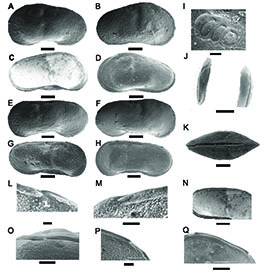
Non-marine ostracods are environmental proxies widely used in Quaternary environmental and climatic reconstructions. In South America (Neotropical Region), extant Limnocytheridae is the third most diverse family, with Limnocythere species typically inhabiting hyposaline to mesosaline waters. The South American Transitional Zone (SATZ), is defined across South America by arid-semiarid climate, holding the Argentinean section five endemic Limnocythere species, representing highest diversity of Limnocythere and the speciation role of this transitional area. This study analyses the diversity, paleoecological traits and distribution of Quaternary Argentinean Limnocythere, describing Limnocythere perseverans sp. nov. from Laguna Llancanelo basin, Salina del Bebedero and Laguna Runtuyoc (Argentinean SATZ), providing a dichotomous key for the 13 Quaternary species found in Argentina. The new species differs from L. cusminskyae (Neotropical Region, humid Chaco-Pampean) and L. staplini (Nearctic Region), in valve morphology (valve shape and hinge structure) and ecological requirements. Limnocythere perseverans sp. nov. prefers sodium-chloride, sulfate or chloride-sulfate waters, segregated from L. cusminskyae living in sodium, bicarbonate-rich waters, and L. staplini found in bicarbonate-depleted waters. These differences highlight its value to reconstruct changes in salinity and water chemistry. The morphological similarities among these three species open questions on biogeographical aspects of aquatic ecology. Further research is necessary to assess whether these species evolved from a shared ancestor or are an example of morphological convergence derived by the adaptation to similar ecological pressures within the Neotropical and Nearctic regions.
References
Baird, W. (1843). Notes on British Entomostraca. The Zoologist, a popular Miscellany of Natural History, 1(7), 193–197.
Beninato, M. (1999). Salina del Bebedero, San Luis; Anales del Servicio Geológico Minero Argentino, 35, 1939–1942.
Benson, R. H., Berdan, J. M., van den Bold, W. A., Hanai, T., Hessland, I., Howe, H. V., Kesling, R. V., Levinson, S. A., Reyment, R. A., Moore, R. C., Scott, H. W., Shaver, R. H., Sohn, I. G., Stover, L. E., Swain, F. M., Sylvester-Bradley, P. C., & Wainwright J. (1961). Part Q: Arthropoda 3 Crustacea, Ostracoda. In: Moore, R. C., & Pitrat, C. W. (Eds.) Treatise on Invertebrate Paleontology. (pp. 1–442) Geological Society of America and University of Kansas Press.
Bertels, A., & Laprida, C. (1998). Ostrácodos (Arthropoda, Crustacea) del Miembro Cerro de la Gloria, Formación Las Escobas (Holoceno), provincia de Buenos Aires, República Argentina. Revista Española de Micropaleontología, 30, 103–128.
Bertels, A., & Martínez, D. (1990). Quaternary ostracods of continental and transitional littoral shallow marine environments. Courier Forschungsinstituo. Senckenberg, 123, 141–159.
Bertels, A., & Martínez, D. (1997). Ostrácodos holocenos de la desembocadura del Arroyo Napostá Grande, sur de la provincia de Buenos Aires, Argentina. Revista Española de Micropaleontología, 29, 29–69.
Bertels-Psotka, A. & Laprida, C. 1998. Ostrácodos (Arthropoda, Crustacea) del Miembro Cerro de la Gloria, Formación Las Escobas (Holoceno), provincia de Buenos Aires, República Argentina. Revista Española de Micropaleontología, 30 (1), 103–128.
Bruniard, E. D. (1982). La diagonal árida argentina: un límite climático real. Revista Geográfica, 95, 5–20.
Brady, G. S. (1867). A synopsis of the recent British Ostracoda. The Intellectual Observer, 12, 110–130.
Calvo Marcilese, L., D’Ambrosio, D. S., Rojo, L. D., & Cusminsky, G. C. (2019). New micropaleontological record (Foraminifera and Ostracoda) from the Late Glacial and Holocene in Salina del Bebedero, San Luis, Argentina: a paleoenvironmental interpretation. In: Cusminsky, G. C., Bernasconi, E., & Concheyro, G. A. (eds) Advances in South American Micropaleontology. (pp. 143–158). Springer Earth System Sciences. https://doi.org/10.1007/978-3-030-02119-1_77
Cátedras de Obras Hidráulicas and Ingeniería Ambiental. (2005). Estudios Hidrológicos, Hidráulicos y Ambientales – Laguna Llancanelo. Universidad Nacional de Córdoba. [Unpublished report].
Connolly, P. 2011 Palaeoenvironmental Reconstruction of Lake Llancanelo, Southern Mendoza, Argentina. [Honorus thesis, University of Wollongong]. http://ro.uow.edu.au/thsci/10
Coviaga, C., Cusminsky, G., & Pérez, P. (2018). Ecology of freshwater ostracods from northern Patagonia and their potential application in paleo-environmental reconstructions. Hydrobiologia, 816, 3–20. https://doi.org/10.1007/s10750-017-3127-1
Curry, B. B., Delorme, L. D., Smith, A. J., Palmer, D. F., & Stiff, B. J. (2012). The Biogeography and Physicochemical Characteristics of Aquatic Habitats of Freshwater Ostracods in Canada and the United States. In: Horne, D. J, Holmes, J. A., Rodriguez-Lazaro, J., & Viehberg, F. A. (Eds.) Developments in Quaternary Sciences (pp. 85–115). Elsevier.
Cusminsky, G. C., & Whatley, R. (1996). Quaternary non-marine ostracods from lake beds in northern Patagonia. Revista Española de Paleontología, 11, 143–154.
Cusminsky, G. C., Schwalb, A., Pérez, P. A., Pineda, D., Viehberg, F., Whatley, R. C., Markgraf, V., Gilli, A., Ariztegui, D., & Anselmetti, F. S. (2011). Late Quaternary environmental changes in Patagonia as inferred from lacustrine fossil and extant ostracods. Biological Journal of the Linnean Society, 103, 397–408.
D’Ambrosio, D. S., Rojo, D. R., & Fontana, S. L. (2020). Quaternary non-marine ostracods of Runtuyoc lake, northern Argentina: new taxonomic descriptions and the implication for Holocene paleoenvironment. Journal of South American Earth Sciences, 98, 102451. https://doi.org/10.1016/j.jsames.2019.102451
D'Ambrosio, D. S., Gomez, M. L., Hoke, G., Ayala, F. G., & May, V. R. (2024). Southern South American hydroclimatic units, their recent continental ostracod association characterisation: useful for palaeohydrological studies. Aquatic Sciences, 86, 51. https://doi.org/10.1007/s00027-024-01054-1
de Oliveira da Conceição, E., Mantovano, T., de Campos, R., Rangel, T. F., Martens, K., Bailly, D., & Higuti, J. 2020. Mapping the observed and modelled intracontinental distribution of non-marine ostracods from South America. Hydrobiologia, 847, 1663–1687. https://doi.org/10.1007/s10750-019-04136-6
Delorme, L. D. (1989). Methods in Quaternary Ecology #7. Freshwater Ostracodes. Geoscience Canada, 16, 85–90.
Ferreira, V. G., Higuti, J. & Martens, K. (2019). A striking case of convergent evolution in two species of Cypricercinae (Crustacea, Ostracoda), with the description of a new genus and species from Brazil. Zoologischer Anzeiger, 283, 1–11.
Ferrero, L. (1996). Paleoecología de ostrácodos holocenos del estuario del río Quequén Grande (provincia de Buenos Aires). Ameghiniana, 33, 209–222.
Ferrero, L. (2009). Foraminíferos y ostrácodos del Pleistoceno Tardío (Mar Chiquita, provincia de Buenos Aires, Argentina). Ameghiniana, 46, 637–656.
Forester, R. M. (1983). Relationship of two lacustrine ostracode species to solute composition and salinity: Implications for paleohydrochemistry. Geology, 11, 435–438.
Forester, R. M. (1985). Limnocythere bradburyi n. sp.: A Modern Ostracode from Central Mexico and a Possible Quaternary Paleoclimatic Indicator. Journal of Paleontology, 59, 8–20.
Forester, R. M. (1986). Determination of the dissolved anion composition of ancient lakes from fossil ostracodes. Geology, 14, 796–798.
Forester, R. M., Lowenstein, T. K., & Spence, R. J. (2005). An ostracode based paleolimnologic and paleohydrologic history of Death Valley: 200 to 0 ka. Geological Society of America Bulletin, 117, 1379–1386. https://doi:10.1130/B25637.1
García, A. (1999). Quaternary charophytes from Salina del Bebedero, Argentina: their relation with extant taxa and palaeolimnological significance. Journal of Paleolimnology, 21, 307–323.
Gutentag, E. D., & Benson, R. H. (1962). Neogene (Plio–Pleistocene) fresh-water ostracodes from the central high plains. Bulletin-State Geological Survey of Kansas, 157, 1–60.
González, M. A., Musacchio, E. A., García, A., Pascual, R., & Corte, A. R. (1981). Las líneas de costa Pleistocenas de la Salina del Bebedero (San Luis, Argentina). Implicancias paleoambientales de sus microfósiles. Actas III del VIII Congreso Geológico Argentino, (pp. 617–628) San Luis.
Hogg, A., Heaton, T., Hua, Q., Palmer, J., Turney, C., Southon, J., Bayliss, A., Blackwell, P. G., Boswijk, G., Ramsey, C. B., Pearson, C., Petchey, F., Reimer, P., Reimer, R. & Wacker, L. (2020). SHCal20 Southern Hemisphere Calibration, 0–55,000 Years cal BP. Radiocarbon, 62(4), 759-778. doi:10.1017/RDC.2020.59.
Laprida, C. (1998). Micropaleontological assemblages (Foraminiferida and Ostracoda) from Late Quaternary marginal marine environments (Destacamento Río Salado Formation), Salado Basin, Argentina. Revue de paléobiologie, 17, 461–478.
Laprida, C. (2006). Ostrácodos recientes de la llanura pampeana, Buenos Aires, Argentina: ecología e implicancias paleolimnológicas. Ameghiniana, 43, 181–204.
Laprida, C., & Valero-Garcés, B. (2009). Cambios ambientales de épocas históricas en la pampa bonaerense en base a ostrácodos: Historia hidrológica de la laguna de Chascomús. Ameghiniana, 46, 95–112.
Laprida, C., Orgeira, M. J., & García Chapori, N. (2009). El registro de la pequeña edad de hielo en lagunas pampeanas. Revista de la Asociación Geológica Argentina, 65, 603–611.
Laprida, C., Plastani, M.S., Iruzún, A., Gogorza, C., Navas, A., Valero-Garcés, B., & Sinito, A. M. (2014). Midlate Holocene lake levels and trophic states of a shallow lake from the southern Pampa plain, Argentina. Journal of Limnology, 73, 325–339.
Lerner-Seggev, R. (1973). Limnocythere titicaca new species (Ostracoda, cytheridae) from Lake Titicaca, Bolivia. Crustaceana 25, 88–94.
Markgraf, V., Bradbury, J. P., Schwalb, A., Burns, S. J., Stern, C., Ariztegui, D., Gilli, A., Anselmetti, F. S., Stine, S., & Maidana, N. (2003). Holocene palaeoclimates of southern Patagonia: limnological and environmental history of Lago Cardiel, Argentina. The Holocene, 13, 581–591.
Marquez, M., Ferrero, L., & Cusminsky, G. C. (2016). Holocene palaeoenvironmental evolution of the Pampa coastal plain (Argentina) based on calcareous microfossils. Revista Brasileira de Paleontologia, 19, 25–40.
Mc Glue, M. M., Palacios-Fest, M. R., Cusminsky, G.C., Camacho, M., Ivory, S. J., Kowler, A. L., & Chakraborty, S. (2017). Ostracode biofacies and shell chemistry reveal Quaternary aquatic transitions in the Pozuelos Basin (Argentina). PALAIOS, 32, 413–428. http://dx.doi.org/10.2110/palo.2016.089
Meisch, C., Smith, R. J., & Martens, K. (2024). An updated subjective global checklist of the extant non-marine Ostracoda (Crustacea). European Journal of Taxonomy, 974, 1–144. https://doi.org/10.5852/ejt.2024.974.2767
Morrone, J. J. (2006). Biogeographic areas and transition zones of Latin America and the Caribbean islands based on panbiogeographic and cladistic analyses of the entomofauna. Annual Review of Entomology, 51, 467–94.
Morrone, J. J., Escalante, T., Rodríguez-Tapia, G., Carmona, A. Arana, M. & Mercado-Gómez, J. D. (2022). Biogeographic regionalization of the Neotropical region: New map and shapefile. Anais da Academia Brasileira de Ciências, 94, e20211167. https://doi.org/10.1590/0001-376520222021116
Mourguiart, P., Corrège, T., Wirrmann, D., Argollo J., Montenegro, M. E., Pourchet, M., and Carbonel, P. (1998). Holocene palaeohydrology of Lake Titicaca estimated from an ostracod-based transfer function. Palaeogeography, Palaeoclimatology, Palaeoecology, 143, 51–72.
Ostera, H. O., Dapeña, C., & Miranda, F. J. (2004). Evaluación geoquímica base en una reserva Natural con actividad petrolera, Malargüe, Provincia de Mendoza, Argentina. XXXIII Congress International Association of Hydrogeologists and 7 ALHSUD Congress. Zacatecas, Mexico.
Palacios-Fest, M. R., Cohen, A. S., and Anadón, P. (1994). Use of ostracodes as paleoenvironmental tools in the interpretation of ancient lacustrine records. Revista Española de Micropaleontologia, 9, 145–164.
Palacios-Fest, M. R., Cusminsky, G. C., & McGlue, M. M. (2016). Late Quaternary lacustrine ostracods (Ostracoda, Crustacea) and charophytes (Charophyta, Charales) from the Puna Plateau, Argentina. Journal of Micropalaeontology, 35, 66–78.
Pérez, A. P., Coviaga, C., Ramos, L., Alvear, P., Cusminsky, G. (2025). Detailed taxonomy and morphological analyses of two key ostracod species from Patagonia, Argentina: distribution and implications for paleoenvironmental reconstructions. Zoologischer Anzeiger, 316, 320–336.
Piovano, E. L., Ariztegui, D., Córdoba, F., Cioccale, M. & Sylvestre, F. (2009). Chapter 14: Hydrological Variability in South America Below the Tropic of Capricorn (Pampas and Patagonia, Argentina) During the Last 13.0 Ka.F. Vimeux et al. (eds.), Past Climate Variability in South America and Surrounding Regions, (323–351). Developments in Paleoenvironmental. DOI 10.1007/978-90-481-2672-9_14.
Ramón-Mercau, J., & Laprida, C. (2016). An ostracod based calibration function for electrical conductivity reconstruction in lacustrine environments in Patagonia, Southern South America. Ecological Indicators, 69, 522–532.
Ramón-Mercau, J., Plastani, M. S., & Laprida, C. (2014). Limnocythere cusminskyae n. sp., a New Species in the Pampean Region (Buenos Aires, Argentina). Zootaxa, 3821, 26–36.
Ramón-Mercau, J., Laprida, C., Massaferro, J., Rogora, M., Tartari, G., & Maidana, N. I. (2012). Patagonian ostracods as indicators of climate related hydrological variables: implications for paleoenvironmental reconstructions in Southern South America. Hydrobiologia, 694, 235–251.
Ramos, L., Alperin, M., Schwalb, A., Markgraf, V., Ariztegui, D. & Cusminsky, G. (2019). Changes in ostracod assemblages and morphologies during lake-level variations of Lago Cardiel (49°S), Patagonia, Argentina, over the last 15.6 ka Boreas, 48, 746–760. https://doi.org/10.1111/bor.12371. ISSN 0300-9483
Ramos, L., Cusminsky G., Schwalb A. & Alperin M. (2016). Morphotypes of the lacustrine ostracod Limnocythere rionegroensis Cusminsky & Whatley from Patagonia, Argentina, shaped by aquatic environments. Hydrobiologia, 786, 137–148.
Sabater, L. M., Monferran, M. D., Higuti, J., & Pérez, A. P. (2024). An annotated checklist of recent non-marine Ostracoda (Crustacea) from Argentina, South America. Zootaxa, 5336, 151–178.
Schwalb, A., Burns, S. J., Cusminsky, G., Kelts, K., & Margraff, V. (2002). Assemblage diversity and isotopic signals of modern ostracodes and host waters from Patagonia, Argentina. Palaeogeography, Palaeoclimatology, Palaeoecology, 187, 323–339.
Seeligmann, C. T. & Maidana N. I. (2019). Consideraciones sobre la comunidad de diatomeas en relación a gradientes de altitud y salinidad en humedales de la Puna y los Altos Andes (Catamarca y Jujuy, Argentina). Bol. Soc. Argent. Bot., 54, 475-486.
Smith, A. J. (1993). Lacustrine ostracodes as hydrochemical indicators in lakes of the north-central United States. Journal of Paleolimnology, 8, 121–134.
Stuiver M & PJ Reimer. (1993). Extended 14C data base and revised CALIB 3.0 14C age calibration program. Radiocarbon, 35, 215–230.
Sylvester-Bradley, P. C. (1956). The structure, evolution and nomenclature of the ostracod hinge. Bulletin of the British Museum (Natural History) Geology, 3, 1–21.
Telford RJ, E Heegaard & HJB Birks. (2004). The intercept is a poor estimate of a calibrated radiocarbon age. The Holocene, 14, 296–298.
Whatley, R. C., & Cusminsky, G. C. (1996). Quaternary lacustrine Ostracoda from northern Patagonia, Argentina. In: Ríha, J. (Ed.) Ostracoda and Biostratigraphy (pp. 303–310) Balkema, Rotterdam.
Whatley, R. C., & Cusminsky, G. C. (1999). Lacustrine Ostracoda and late Quaternary palaeoenvironments from the Lake Cari-Laufquen region, Rio Negro province, Argentina. Palaeogeography, Palaeoclimatology, Palaeoecology, 151, 229–239.
Whatley, R. C., & Cholich, T. C. (1974). A new Quaternary ostracod genus from Argentina. Palaeontology, 17, 669–684.
Zabert, L. L. 1981. Ostrácodos Cuartarios de Taco Pozo (Provincia Chaco, Argentina) con algunas consideraciones paleoecologicas. FACENA, 4, 77–87.
Additional Files
Published
Issue
Section
License
Copyright (c) 2026 Débora Sabina D´ Ambrosio, Adriana García

This work is licensed under a Creative Commons Attribution-NoDerivatives 4.0 International License.
Authors retain copyright and grant the journal right of first publication with the work simultaneously licensed under a Atribución/Reconocimiento 4.0 Internacional that allows others to share the work with an acknowledgement of the work's authorship and initial publication in this journal.

 0.299 Q3 | H Index 12
 CiteScore 2.2